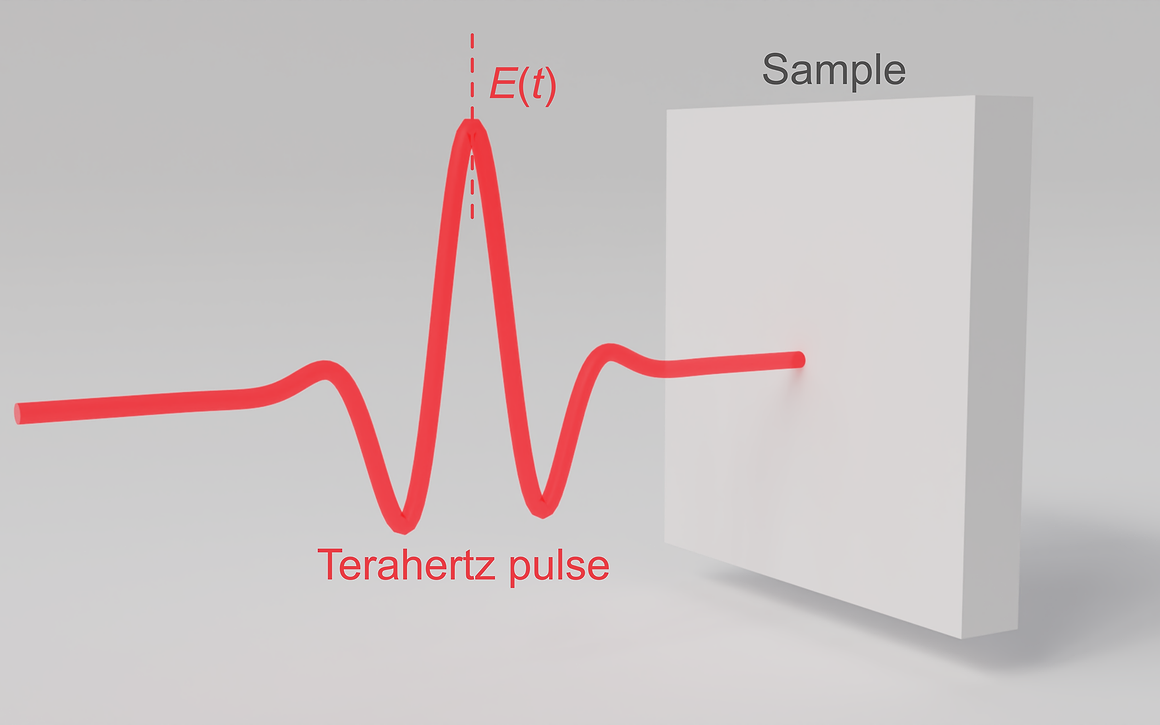
Terahertz time-domain spectroscopy (THz-TDS) is a powerful tool for probing the optical response of materials in the THz frequency range. THz spectra are rich in low-energy collective excitations that serve as fingerprints of quantum phases, including magnons, phonons, and superconducting gaps (see Fig. 1 in Kumar et al. 2019).
Using electro-optic sampling, the instantaneous electric field of a THz pulse can be measured with ~50 fs resolution, allowing the time-domain waveform of the pulse lasting only a few ps (10^-12 s) to be directly recorded.
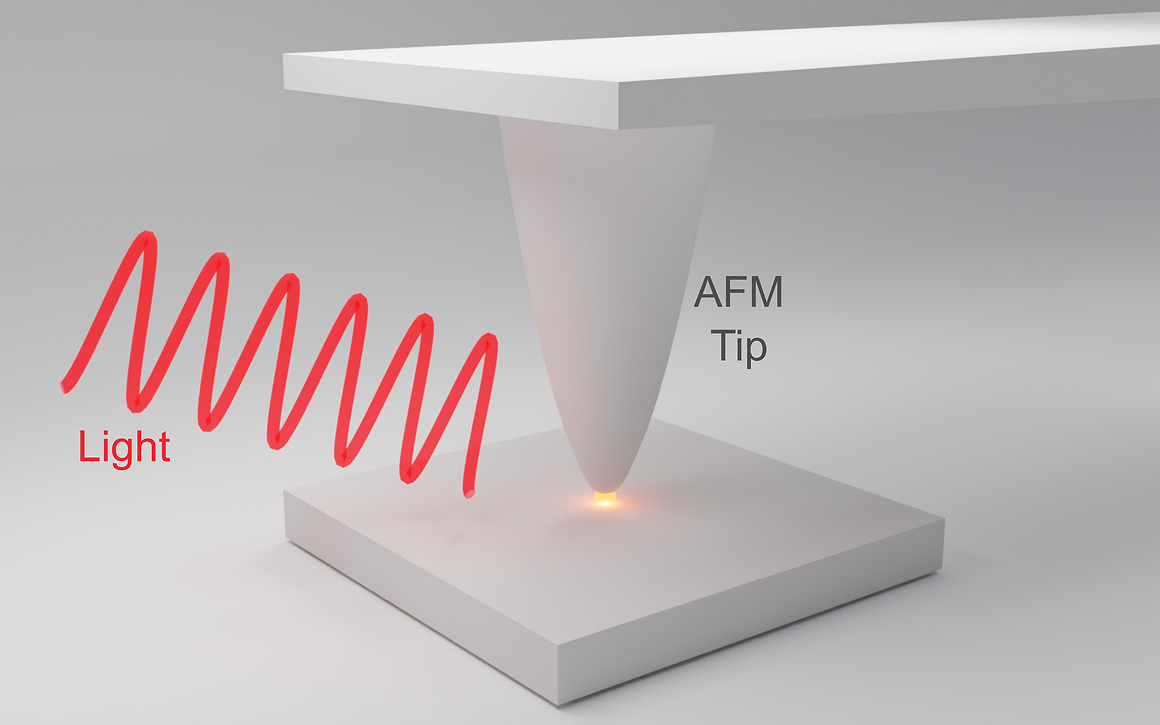
The metallic AFM tip acts like a nano-antenna that concentrates light at its apex, couples to evanescent near fields, and scatters them into detectable far-field radiation. This enables nanometer-resolved access to local optical properties and high-momentum excitations such as polaritons.
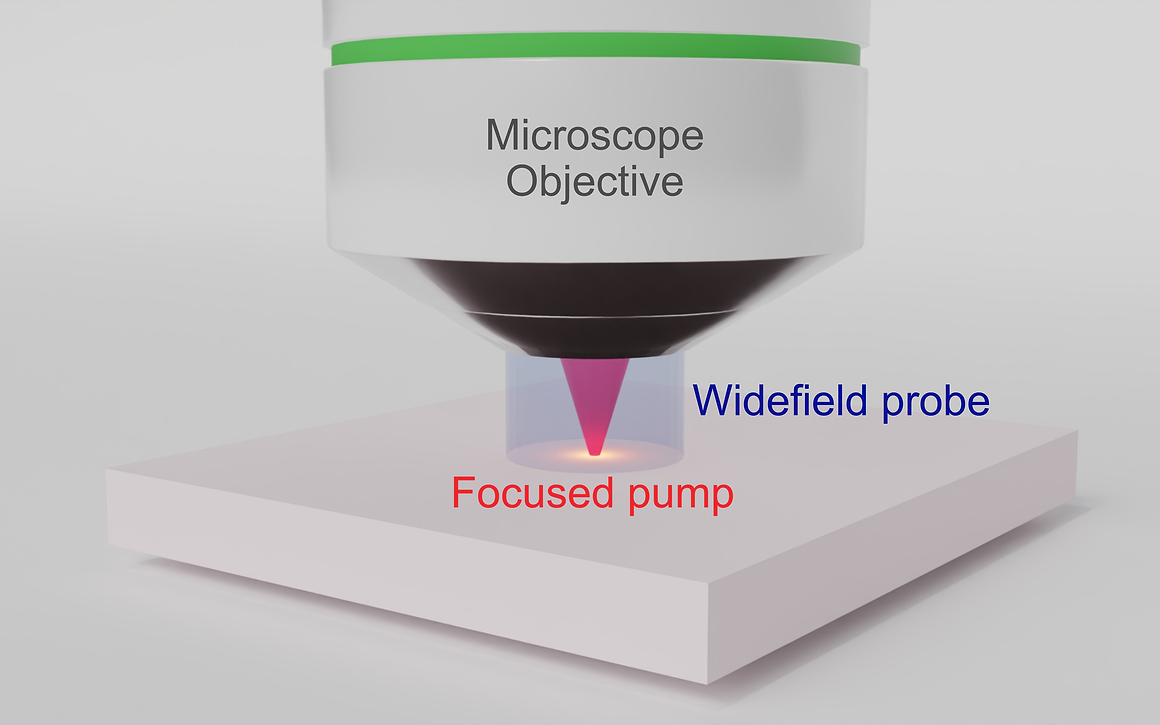
It differs from conventional pump-probe spectroscopy by using a focused pump beam to excite the sample and a widefield, collimated probe beam to capture a large real-space image. Its sensitivity is greatly enhanced by interfering the light scattered from subwavelength objects with the widefield reflected light. StroboSCAT can be used to image a wide variety of propagating species, such as excitons, ballistic polaritons, and phonons.